Should You Get a Home Energy Audit Before Insulating?
You've decided your house needs more insulation. Maybe the upstairs bedrooms run hot in summer and cold in winter, or your energy bills keep climbing even though you haven't changed how you use the thermostat. The next question is where the problem money should go, and that's exactly what a home energy audit is designed to answer before a single bag of insulation gets opened.
An energy audit isn't a requirement for insulating your home. Plenty of homeowners skip it and go straight to an obvious problem area, like a bare attic, and still see a real improvement. But if you're not sure where your losses are coming from, or you want to spend your insulation budget on the upgrades that pay back fastest, an audit gives you data instead of guesswork.
What Actually Happens During an Energy Audit
A real home energy audit is more than someone walking around with a flashlight. A trained auditor uses a handful of diagnostic tools to build a picture of how air and heat move through your house, and where they're escaping when they shouldn't be.
The Blower Door Test
This is the centerpiece of most professional audits. The auditor fits a calibrated fan and airtight panel into an exterior door frame, then depressurizes the house. As air gets pulled out, outside air rushes in through every crack, gap, and unsealed penetration in the building envelope. The auditor can then walk the house with a handheld device or their hand and feel exactly where air is leaking, while a manometer measures overall air changes per hour so you get a real number for how leaky the house is, not just a subjective impression.
Thermal Imaging
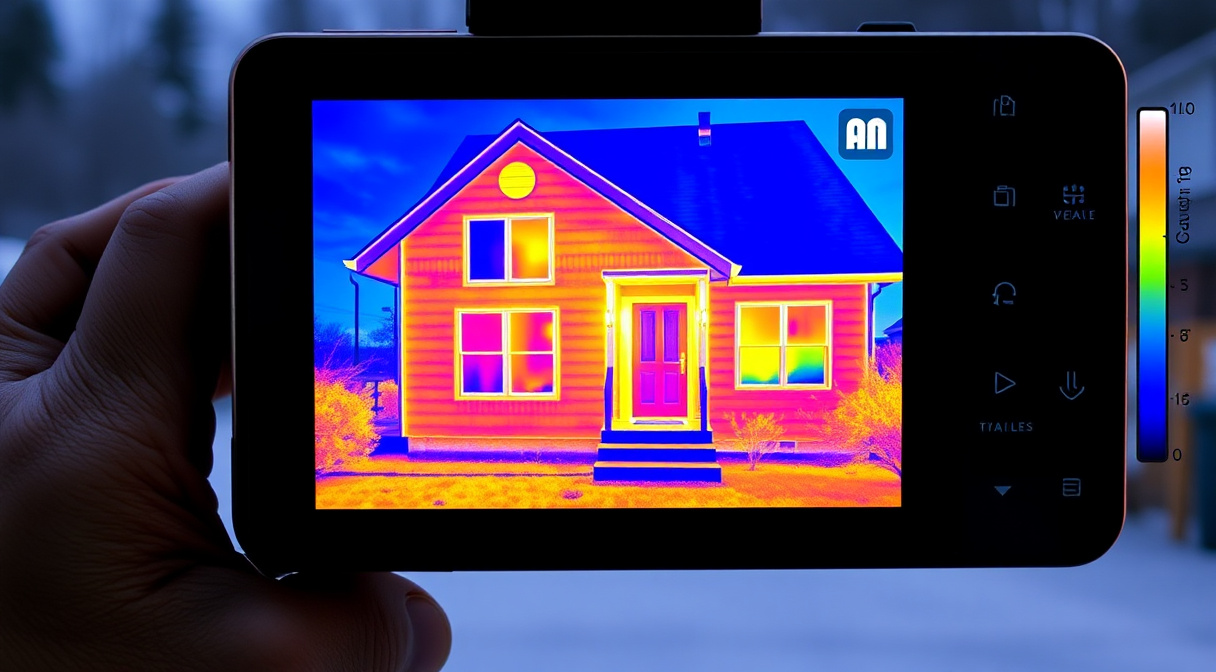
Infrared cameras show surface temperature differences that are invisible to the naked eye. During or after a blower door test, an auditor scans walls, ceilings, and floors and the camera lights up cold streaks where insulation is missing, compressed, or was installed unevenly. Thermal imaging is especially good at catching problems batt insulation often has, like gaps around electrical boxes, insulation that's settled or been disturbed, or missing coverage behind knee walls and in dropped soffits that you'd never spot by eye.
Insulation Depth and Condition Check
In the attic specifically, the auditor will measure existing insulation depth against the R-value it's supposed to provide, check for compression, moisture staining, pest damage, or gaps around the attic hatch and recessed lighting. This is also when they'll flag ventilation problems, like blocked soffit vents or missing baffles, that would undercut a new insulation job if left unaddressed.
A thorough audit typically also includes a combustion safety check on gas appliances (important if the house is going to get tighter), a look at ductwork for leaks if you have forced air, and a walkthrough of doors, windows, and rim joists for obvious air sealing opportunities.
Why This Helps You Prioritize Insulation Spending
Most homes don't lose heat evenly. It's common for a house to have one or two dominant problem areas responsible for the majority of energy loss, while other parts of the envelope are already performing fine. Without data, homeowners often insulate based on assumption; the attic gets the attention because it's visible and accessible, while a leaky crawl space or an underinsulated garage wall shared with living space goes untouched.
This matters most when you're working with a limited budget and can't do the whole house at once. An audit report gives you a prioritized list, ranked by cost-to-benefit, instead of a gut feeling. It also catches air sealing opportunities that should happen before insulation goes in. Insulating over an air leak muffles the symptom without fixing the cause, and it can trap moisture against materials that weren't designed for it.
DIY Audit vs. a Professional Audit
You can absolutely do a basic version of this yourself. Walk your house on a windy or very cold day with a stick of incense or a tissue near outlets, window frames, door thresholds, attic hatches, and where pipes or wires penetrate walls, and watch for movement. Check your attic insulation depth against the general rule of thumb for your region, look for dark or matted spots that suggest air leakage or moisture, and note any daylight visible around recessed lights or the attic access panel.
A DIY walkthrough is genuinely useful for catching obvious problems, and it costs nothing but time. What it can't do is quantify anything. You'll find leaks you can feel, but a blower door test finds leaks you can't feel and gives you a number to compare before-and-after work. Thermal imaging catches insulation gaps hidden behind drywall that no visual walkthrough will ever find. If your energy bills are unusually high relative to your home's size and age, or you've already insulated once and aren't seeing the improvement you expected, that's a strong signal a DIY check isn't going to find the real issue.
When It's Worth Paying for an Audit, and When You Can Skip It
An audit earns its cost when the problem is genuinely unclear, when you're planning a larger, multi-area insulation investment and want to sequence it correctly, when you've had unexplained moisture, ice damming, or comfort complaints in specific rooms, or when you want a baseline you can measure improvement against after the work is done.
It's reasonable to skip a formal audit when the problem is obvious and singular, like an attic with six inches of old, compressed batt insulation and nothing else, a crawl space with visible gaps and no vapor barrier, or a detached garage with bare stud bays. In cases like these, an experienced insulation contractor can usually identify the fix during an in-person estimate without needing the full diagnostic package, and you can put that money toward the insulation itself instead.
Whichever way you go, the fix that follows matters more than the diagnosis. Whether it's spray foam in an attic or rim joist, blown-in cellulose in open wall cavities, or a proper crawl space encapsulation, the goal is the same: stop uncontrolled air movement and get consistent, adequate R-value across the whole envelope, not just the parts that were easiest to reach.
Ready to figure out where your home is actually losing energy, and what to do about it? Call 844-967-5247 or email josh@contractorschoiceagency.com to talk through your situation and get a straightforward recommendation, audit or no audit.
Frequently asked questions
A full professional audit with a blower door test and thermal imaging typically takes two to four hours depending on the size of the house and how many problem areas need documenting. A basic DIY walkthrough can be done in under an hour.
No. An audit is most valuable the first time you're trying to understand where a home is losing energy or before a large, multi-area project. If you're addressing a single obvious problem area, like a bare attic, a contractor estimate is usually enough to move forward.
Ready for a free quote?
Tell us about your home and we'll build a clear quote — rebates included.