Attic Insulation
Your attic is the single biggest source of whole-home heat loss and heat gain — and the most common, highest-return insulation upgrade a homeowner can make.
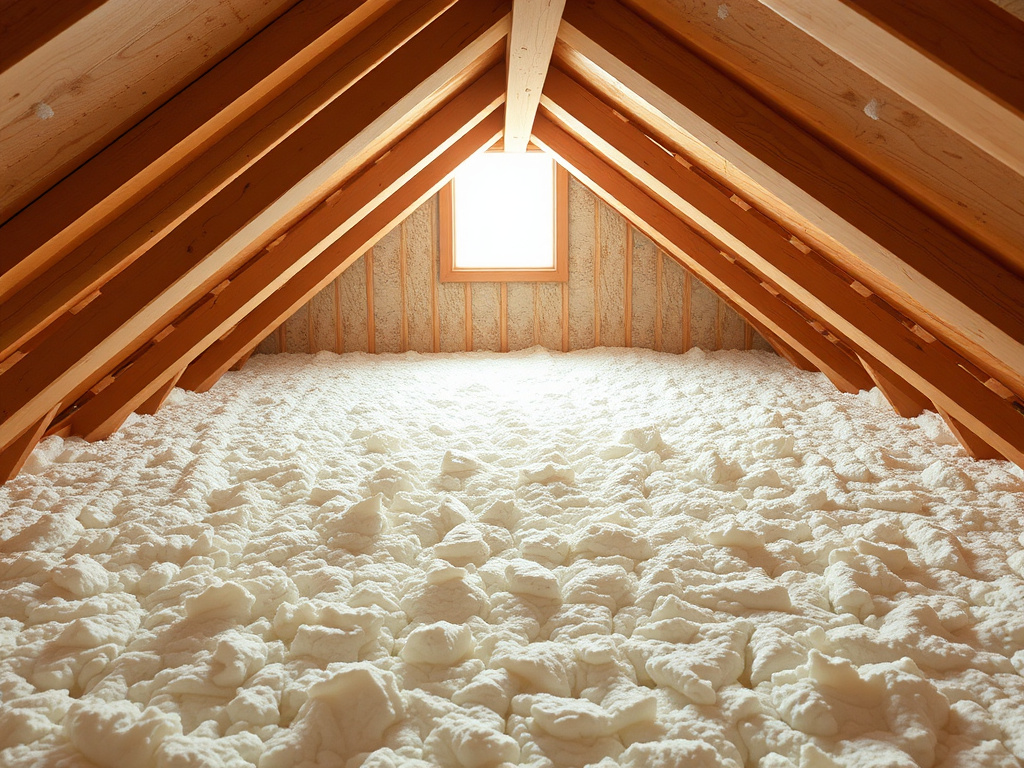
Heat rises, and an under-insulated attic is where most of it escapes in the winter and where most of it pours back in during the summer. It's the reason upstairs bedrooms run hot in July and cold in January, the reason furnaces and air conditioners run longer than they should, and — in colder climates — the reason ice dams form along the eaves. Because the attic floor is usually open and accessible, it's also the single easiest place in a house to fix, which is why attic insulation is consistently the highest-return upgrade a homeowner can make relative to the cost.
How much insulation your attic actually needs depends heavily on where you live. Colder regions generally target a higher R-value — often somewhere in the R-38 to R-60 range — while milder climates can get by with less. There's no single national number that's right for every house, and guessing usually means either paying for insulation you don't need or leaving your attic under-protected. A contractor in our network can measure your existing insulation, check it against the recommendation for your specific location, and tell you exactly what closes the gap.
Why homeowners choose it
- Attacks the single largest source of heat loss and heat gain in most homes
- Reduces furnace and AC runtime, which lowers monthly energy bills
- Helps prevent ice dams by keeping attic temperatures closer to outdoor temps
- Improves upstairs comfort — fewer hot bedrooms in summer, fewer cold ones in winter
- Often the fastest-payback insulation upgrade available for an existing home
- Can be combined with air sealing for an even bigger performance jump
How much attic insulation do you actually need?
Target R-value for an attic floor is driven by climate — the colder the region, the higher the recommended R-value, generally landing somewhere between R-38 on the milder end and R-60 in the coldest zones. That's a meaningful range, and the right number for your specific house depends on where you live, your roof design, and how your attic is ventilated. Rather than quote a generic figure that might be wrong for your location, we start by measuring what's actually up there now.
Most attics we inspect are under-insulated relative to current recommendations, often because the home was built decades ago under an older, lower standard, or because existing insulation has settled, matted down, or been disturbed by storage, wiring work, or pests. A contractor can tell you your current R-value, what's recommended for your area, and the most cost-effective way to close that gap — whether that's a full top-up or a targeted fix in specific spots.
Blown-in, batt, or spray foam — which is right for your attic?
Blown-in insulation (cellulose or fiberglass) is the most common attic upgrade because it's fast to install, fills irregular spaces and gaps around joists better than batts, and is usually the most cost-effective way to add significant R-value to an open attic floor. Batt insulation works well for simply framed attics with consistent joist spacing but requires careful cutting and fitting — gaps and compression around obstructions are a common installation mistake that quietly kills performance. Spray foam, usually applied to the underside of the roof deck rather than the attic floor, creates a conditioned attic space and delivers the strongest air seal of the three, at a higher cost.
For most straightforward attic top-ups, blown-in insulation delivers the best balance of cost and performance. Spray foam earns its premium in attics with complex framing, HVAC equipment or ductwork located in the attic, or homes fighting serious air-leakage or moisture problems. A contractor can walk your attic and tell you which approach fits your situation and budget.
- Blown-in — fastest, fills gaps well, best value for most standard attic top-ups
- Batt — works for simple framing, but installation quality matters enormously
- Spray foam — creates a conditioned attic, strongest air seal, higher upfront cost
Ice dams and the air-sealing connection
In colder climates, an under-insulated, poorly air-sealed attic doesn't just waste energy — it can cause real damage. Warm air leaking up from living spaces heats the underside of the roof deck unevenly, melting snow that then refreezes at the colder eaves, building an ice dam that can force water back up under shingles and into the house. Adding insulation alone helps, but air-sealing the attic floor first — closing gaps around light fixtures, top plates, plumbing stacks, and the attic hatch — is what actually stops the heat loss that causes the problem in the first place.
Good attic work always addresses both: air sealing to stop the leaks, then insulation to slow the conductive heat loss that gets through. Skipping the air-sealing step and just adding more loose-fill on top of an already-leaky attic floor is a common shortcut that leaves real performance on the table.
Ideal for
- Homes with visible gaps, thin spots, or matted-down insulation in the attic
- Upstairs rooms that are noticeably hotter or colder than the rest of the house
- Homeowners dealing with ice dams or icicles along the roofline in winter
- Older homes that have never had insulation upgraded since original construction
- Anyone comparing energy bills to similar-sized homes and coming up short
What affects the cost
Attic Insulation questions, answered
If you can see the tops of your ceiling joists through the insulation, or if your attic insulation looks thin, matted, or uneven, it's likely under the recommended level for your area. A contractor can measure your current depth and R-value and compare it against the target for your climate in a single visit.
For most under-insulated homes, yes — the attic is typically the largest single source of heat loss and gain, so closing that gap tends to produce a noticeable, measurable drop in heating and cooling costs. The exact savings depend on your starting point, your climate, and your HVAC system.
Not always. If existing insulation is dry, clean, and in reasonably good condition, new blown-in insulation can often be added right on top. Removal is typically necessary if the old material is wet, moldy, pest-contaminated, or if you're switching to a different insulation type that shouldn't be layered.
It can, especially when paired with air sealing. Ice dams form when heat escapes into the attic and melts roof snow unevenly, so stopping that heat loss — by sealing air leaks and bringing insulation up to the right level — addresses the root cause rather than just the symptom.
Attic Insulation done right, the first time
Attic Insulation isn't a commodity — the result depends entirely on how carefully it's planned and installed for your specific project. We assess what the space actually needs, prep it properly, and install to your target R-value, so the work delivers the comfort and energy savings it's supposed to. No shortcuts, no builder-grade rush.
We work with homeowners, property managers, and container-conversion builders nationwide, and we'll help you check what current rebate or weatherization-assistance programs apply to your project. Every job starts with a free, no-pressure quote.
Just as important, we treat every project like the system it is. Insulation, ventilation, and air sealing (or, for a container, vapor sealing) all interact, and getting one right while ignoring the others leaves comfort and savings on the table. When we scope your attic insulation, we look at how it fits the whole picture — so the finished result performs the way it should and actually lowers the bill you feel every month. That whole-project mindset, plus honest advice about what your space truly needs, is what our clients count on us for.
Free assessment
We evaluate your project and give you a clear, itemized quote.
Expert install
We prep and install your attic insulation to spec — clean and on schedule.
Savings you can feel
Lower energy bills, a more comfortable space, and honest guidance on any rebates you may qualify for.
Related services
Ready for a free attic insulation quote?
Tell us about your home and we'll put together a clear, no-pressure quote — plus walk you through the weatherization rebates you may qualify for.