Batt & Fiberglass Insulation
Batt insulation is the standard for new construction and open framing, and it's the insulation type where installation quality matters most — a well-installed batt and a poorly installed one can perform very differently.
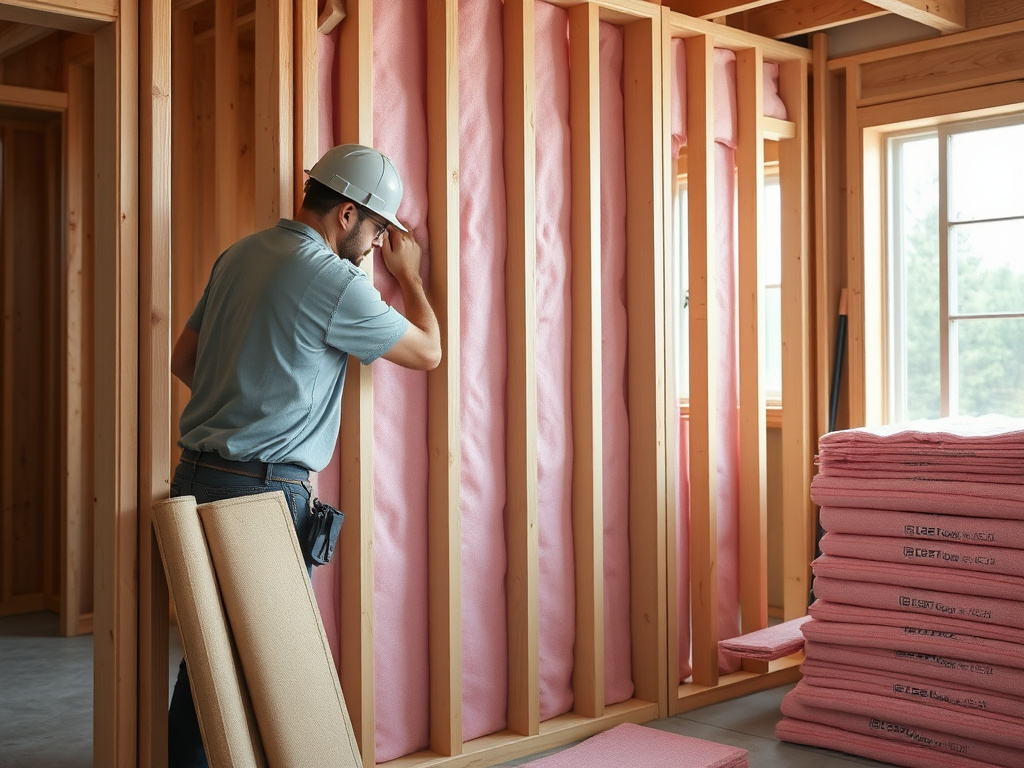
Fiberglass and mineral wool batts are pre-cut panels of insulation designed to fit between studs, joists, and rafters at standard spacing, which makes them the default choice for new construction, additions, and any project where framing is open and accessible. They're familiar, widely available, and cost-effective for straightforward, regularly spaced framing — the kind of job batts were built for.
What most homeowners don't realize is how much installation quality affects actual performance. A batt that's compressed to fit a space it wasn't sized for, cut short around an outlet box, or left with gaps at the edges can lose a significant share of its rated R-value — even though it still looks like insulation from a quick glance. Getting batt insulation right is less about the material and more about the fit, which is why we treat installation as carefully as material selection.
Why homeowners choose it
- Cost-effective for standard, regularly spaced wall and ceiling framing
- Straightforward to install correctly in new construction and additions
- Available in fiberglass and mineral wool, including fire-resistant and sound-dampening options
- Fast turnaround for open-framing jobs compared to spray-applied methods
- Mineral wool offers strong fire resistance and sound absorption where that matters
- Predictable, consistent R-value when installed to fit properly
Fiberglass vs. mineral wool batts
Fiberglass batts are the most common and generally the most affordable option, offering solid R-value per inch and wide availability in standard widths and thicknesses to match typical framing. Mineral wool (also called rock wool) batts cost more but bring real advantages: better fire resistance since the material itself doesn't support combustion the way fiberglass can, stronger sound-dampening performance for interior walls where noise control matters, and a rigidity that holds its shape well in a cavity without sagging.
For most standard exterior walls and attic rafters, fiberglass does the job at a lower price point. Mineral wool earns its premium in specific situations — interior walls around bedrooms or media rooms where sound matters, garages or mechanical rooms where fire resistance is a priority, or anywhere the extra rigidity makes for a cleaner installation.
- Fiberglass — most affordable, widely available, solid standard performance
- Mineral wool — better fire resistance, stronger sound dampening, holds shape well
- Material choice often comes down to the specific room and priority
Why installation quality makes or breaks batt performance
Batt insulation's rated R-value assumes it's installed at full, uncompressed thickness filling the entire cavity with no gaps. In practice, that's where a lot of amateur and rushed installations fall short. Compressing a batt to stuff it into a cavity that's slightly too narrow, or cramming an oversized batt into a shallow one, reduces its effective R-value because insulation performance depends on trapped air, and compression squeezes that air out. Gaps left around electrical boxes, pipes, or where a batt is cut short leave a direct thermal bypass — a spot where heat moves almost freely regardless of how good the batt itself is.
A careful installation means cutting batts to fit around obstructions rather than just cramming them past, splitting batts to wrap wiring and boxes instead of compressing around them, and making sure facing (if used) is oriented and sealed correctly. It's a job where two crews using the identical material can produce noticeably different real-world results, which is exactly why installation quality is something worth asking a contractor about directly.
New construction and additions
Batt insulation fits naturally into the new-construction and addition timeline — it goes in after framing and rough-in (electrical, plumbing, HVAC) but before drywall, when the cavity is fully open and easy to access. This is also the ideal window to combine batts with basic air sealing, caulking, and foaming smaller gaps around penetrations before the walls are closed up, since that access disappears once drywall goes up.
For additions in particular, it's worth confirming the new insulation meets or exceeds current recommendations rather than just matching whatever's in the older part of the house — an addition is a chance to insulate to a higher standard without any of the access challenges a retrofit would involve.
Ideal for
- New construction with standard stud and joist spacing
- Home additions and room build-outs with open, accessible framing
- Renovations where walls or ceilings are already open to the studs
- Homeowners who want fire-resistant or sound-dampening mineral wool in specific rooms
- Projects on a budget where regularly spaced framing makes batts the practical choice
What affects the cost
Batt & Fiberglass questions, answered
Neither is universally better — fiberglass is more affordable and performs well for standard applications, while mineral wool costs more but offers better fire resistance and sound dampening. The right choice depends on the specific room and what matters most for that application.
Batt insulation's R-value rating assumes full, uncompressed coverage with no gaps. Compressing batts to fit or leaving gaps around obstructions creates thermal bypasses that let heat move through much more easily, so two identical batts installed differently can perform very differently in practice.
Yes, batts can insulate an attic floor, but blown-in insulation is often preferred for attics because it flows around obstructions and irregular framing more completely. Batts tend to make more sense for open wall and ceiling framing with regular stud or joist spacing.
If old insulation is dry, intact, and not compressed or damaged, new batts can sometimes be installed alongside or over it depending on the application. Damaged, wet, or heavily compressed old batts should generally be removed so the new material can perform at its full rated value.
Batt & Fiberglass done right, the first time
Batt & Fiberglass isn't a commodity — the result depends entirely on how carefully it's planned and installed for your specific project. We assess what the space actually needs, prep it properly, and install to your target R-value, so the work delivers the comfort and energy savings it's supposed to. No shortcuts, no builder-grade rush.
We work with homeowners, property managers, and container-conversion builders nationwide, and we'll help you check what current rebate or weatherization-assistance programs apply to your project. Every job starts with a free, no-pressure quote.
Just as important, we treat every project like the system it is. Insulation, ventilation, and air sealing (or, for a container, vapor sealing) all interact, and getting one right while ignoring the others leaves comfort and savings on the table. When we scope your batt & fiberglass, we look at how it fits the whole picture — so the finished result performs the way it should and actually lowers the bill you feel every month. That whole-project mindset, plus honest advice about what your space truly needs, is what our clients count on us for.
Free assessment
We evaluate your project and give you a clear, itemized quote.
Expert install
We prep and install your batt & fiberglass to spec — clean and on schedule.
Savings you can feel
Lower energy bills, a more comfortable space, and honest guidance on any rebates you may qualify for.
Related services
Ready for a free batt & fiberglass quote?
Tell us about your home and we'll put together a clear, no-pressure quote — plus walk you through the weatherization rebates you may qualify for.