Blown-In Cellulose Insulation
Blown-in insulation fills attics and existing walls fast, flows around obstructions batts can't handle, and — with dense-pack cellulose — can upgrade wall insulation without tearing out drywall.
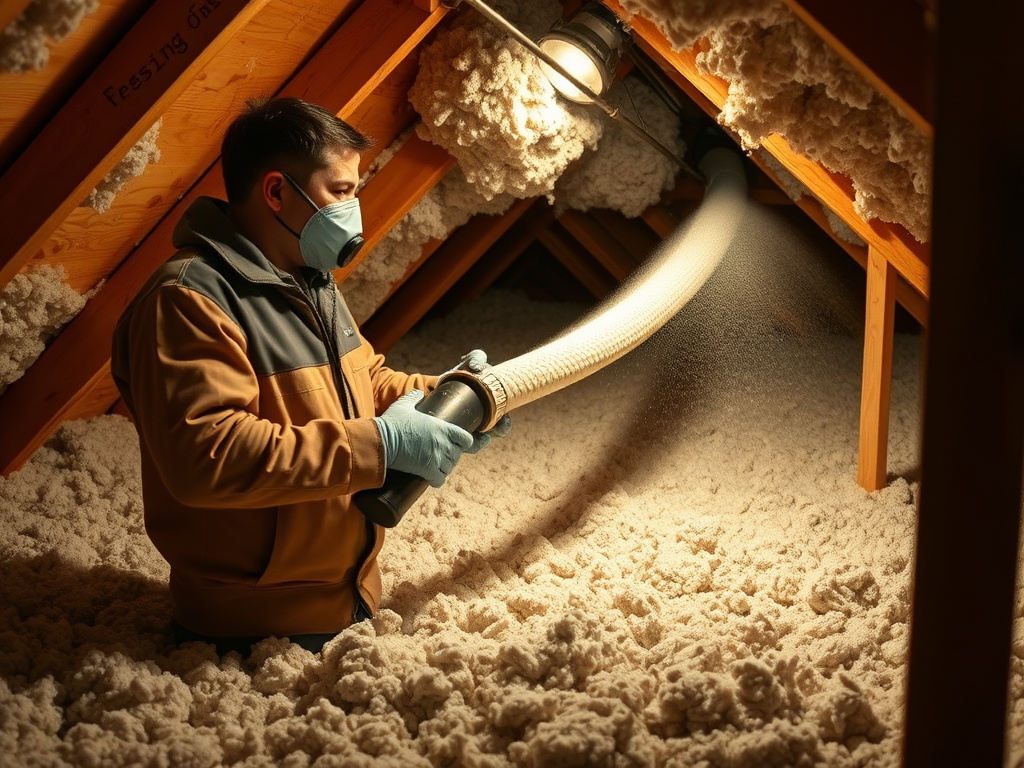
Blown-in insulation, whether cellulose or fiberglass, is loose material installed with a blowing machine that fills an attic floor or wall cavity far more completely than batts can manage. Because it's blown rather than cut and fitted, it flows around wiring, plumbing, and irregular framing instead of leaving the gaps and compression zones that are so common with hand-fitted batt insulation. That makes it the go-to choice for topping up an existing attic and, with dense-pack technique, for retrofitting insulation into finished exterior walls that were built with little or none.
Cellulose and fiberglass loose-fill perform differently and cost differently, and the right choice depends on the application, your budget, and priorities like fire resistance or moisture behavior. Both are a fast, efficient way to add real R-value to an attic in a single visit, and both can be installed over existing insulation in most cases without a full teardown.
Why homeowners choose it
- Installs fast — most attic top-ups are completed in a single day
- Flows around wiring, framing, and obstructions far better than cut-and-fit batts
- Can be added over existing attic insulation without removing what's already there
- Dense-pack cellulose retrofits exterior walls without removing drywall
- Settles into a consistent, even layer with no gaps or compression
- Cellulose is treated for fire resistance and made from recycled material
Cellulose vs. fiberglass loose-fill
Cellulose loose-fill is made primarily from recycled paper treated with fire-retardant chemicals, and it packs slightly denser than fiberglass loose-fill, which gives it a modest edge in reducing air movement through the insulation layer. Fiberglass loose-fill is made from spun glass fibers, doesn't absorb moisture the way cellulose can, and is a common choice where dust or settling behavior is a bigger concern than air infiltration.
Both deliver solid R-value per inch and are installed the same way, with a blowing machine feeding material through a hose to the attic or wall cavity. The choice often comes down to what a particular home or region's contractors work with most, plus specific priorities — cellulose for its density and recycled content, fiberglass for its moisture resistance and consistent settling. A contractor can walk you through which fits your project.
- Cellulose — denser pack, treated for fire resistance, made from recycled paper
- Fiberglass — doesn't absorb moisture, consistent long-term performance
- Both flow around obstructions far better than batts
Attic top-ups: the fastest way to raise your R-value
If your attic already has some insulation but it's below the recommended level for your climate, blowing in additional material on top is usually the fastest and most cost-effective fix — there's typically no need to remove what's already there as long as it's dry and in reasonable condition. A crew can measure your existing depth, calculate how much additional material gets you to target R-value, and blow it in place in a matter of hours for most attics.
This is the single most common insulation job we do, because so many homes were insulated to an older, lower standard decades ago and have simply never been topped up since. It's also one of the best-value energy upgrades available, since the labor and material cost is relatively low compared to the ongoing energy savings from closing the gap.
Dense-pack cellulose for existing walls
Older homes are frequently found with little or no insulation inside exterior wall cavities, and gutting drywall to fix that isn't something most homeowners want to take on. Dense-pack cellulose solves this by drilling small access holes — typically one per stud bay, from either inside or outside — and packing cellulose into the wall cavity at high density using specialized equipment. The holes are patched afterward, and the wall ends up substantially insulated without any drywall demolition.
Dense-pack requires more skill and specialized equipment than a standard attic blow, since the material has to be packed tightly enough to avoid settling over time inside a closed cavity. It's a job worth hiring an experienced crew for, and it's one of the few ways to meaningfully improve wall insulation in a finished home without a renovation-scale project.
Ideal for
- Attics that need a top-up rather than a full insulation replacement
- Older homes with uninsulated or under-insulated exterior walls
- Irregularly framed attics where batts leave gaps around obstructions
- Homeowners who want a wall insulation upgrade without opening up drywall
- Anyone looking for a fast, cost-effective way to raise whole-home R-value
What affects the cost
Blown-In Cellulose questions, answered
In most cases, yes, as long as the existing insulation is dry and not contaminated by mold, pests, or debris. A contractor will check the condition first, since blowing new material over compromised insulation just traps the problem underneath.
The process requires drilling small access holes, typically one per stud bay, which are patched and finished afterward. It's a far less invasive approach than removing drywall, and a professional crew keeps the holes small and the patching clean.
Most standard attic top-ups are completed in a single visit, often just a few hours depending on square footage and how much material needs to be added to reach target R-value.
Some settling is normal and is typically accounted for in how much material is installed initially. Dense-pack cellulose in walls is specifically packed at high density to minimize settling, which is why it requires trained installers rather than a loose, low-density fill.
Blown-In Cellulose done right, the first time
Blown-In Cellulose isn't a commodity — the result depends entirely on how carefully it's planned and installed for your specific project. We assess what the space actually needs, prep it properly, and install to your target R-value, so the work delivers the comfort and energy savings it's supposed to. No shortcuts, no builder-grade rush.
We work with homeowners, property managers, and container-conversion builders nationwide, and we'll help you check what current rebate or weatherization-assistance programs apply to your project. Every job starts with a free, no-pressure quote.
Just as important, we treat every project like the system it is. Insulation, ventilation, and air sealing (or, for a container, vapor sealing) all interact, and getting one right while ignoring the others leaves comfort and savings on the table. When we scope your blown-in cellulose, we look at how it fits the whole picture — so the finished result performs the way it should and actually lowers the bill you feel every month. That whole-project mindset, plus honest advice about what your space truly needs, is what our clients count on us for.
Free assessment
We evaluate your project and give you a clear, itemized quote.
Expert install
We prep and install your blown-in cellulose to spec — clean and on schedule.
Savings you can feel
Lower energy bills, a more comfortable space, and honest guidance on any rebates you may qualify for.
Related services
Ready for a free blown-in cellulose quote?
Tell us about your home and we'll put together a clear, no-pressure quote — plus walk you through the weatherization rebates you may qualify for.