Spray Foam Insulation
The highest R-value per inch and a true air seal in one step — spray foam insulates and seals against air leaks in a single application, which no other insulation product does.
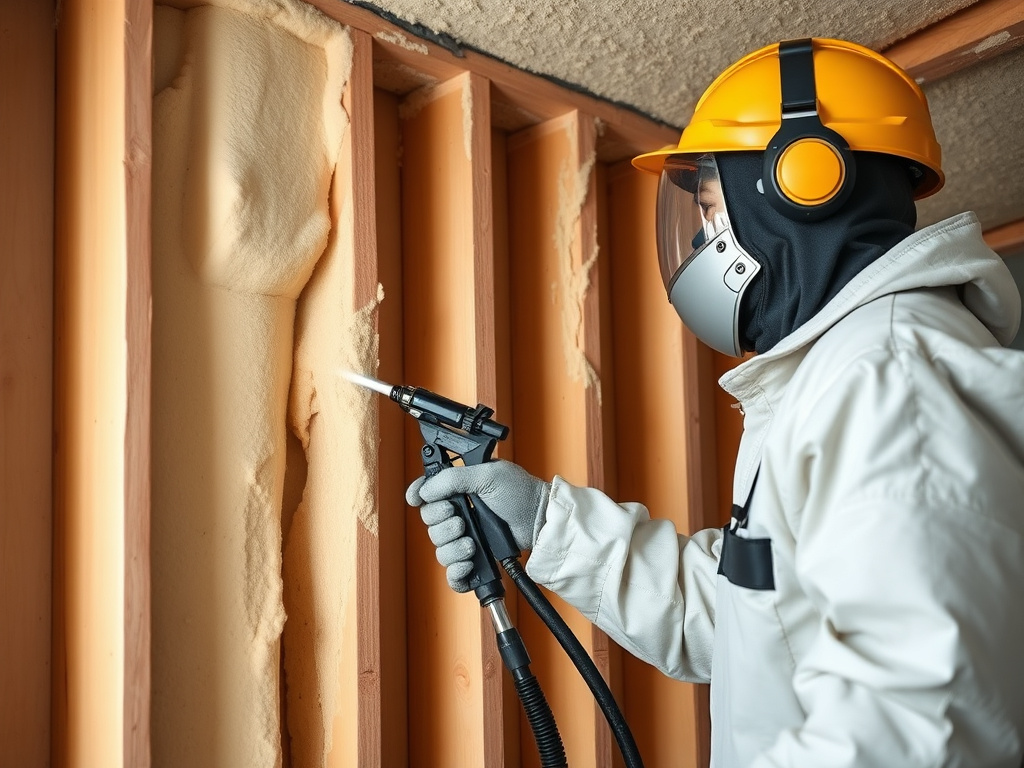
Every home loses conditioned air through gaps, cracks, and thin spots around wiring, plumbing, framing, and rim joists — spots that batts and loose-fill insulation were never designed to seal. Spray foam is the only common insulation product that insulates and air-seals at the same time: it expands into every crevice and cures into a continuous barrier, so the air you paid to heat or cool stays inside instead of leaking out through a hundred small gaps you can't see. That combination of R-value and airtightness is what actually moves the needle on comfort and monthly energy bills, in a hot climate, a cold one, or anywhere temperatures swing between the two.
We install both open-cell and closed-cell spray foam, and we don't default to the most expensive option just because it exists. Whether you're sealing a rim joist against wind infiltration, finishing a crawlspace, insulating a vaulted ceiling, or upgrading a full attic, we match the product to the application and the climate so you get real performance without paying for capability your home doesn't need. Connect with a local licensed contractor through our network and get a straight answer on what your project actually calls for.
Why homeowners choose it
- The highest R-value per inch of any common insulation product
- Air-seals and insulates in a single application — no separate air-sealing pass required
- Stops conditioned air and outside air from trading places through gaps and cracks
- Won't sag, settle, or compress the way loose-fill and batts can over time
- Adds real structural rigidity at rim joists and band areas prone to air infiltration
- Excellent for hard-to-insulate spaces like crawlspaces and vaulted ceilings
Open-cell vs. closed-cell spray foam
Open-cell and closed-cell foam do different jobs, and the right call isn't always the most expensive one. Open-cell foam is lighter, expands more per board foot, and delivers a strong air seal at a lower cost per square foot — a smart value pick for a straightforward attic floor. Closed-cell foam costs more, delivers a higher R-value per inch in a shallow cavity, and acts as a genuine moisture and vapor barrier, which matters in rim joists, crawlspace walls, and any spot exposed to ground moisture, humidity, or condensation risk.
We assess each part of your home rather than pushing one product everywhere. An attic floor with plenty of depth to work with is often a better fit for open-cell, where the air seal is the main goal and the extra cost of closed-cell doesn't buy you much. A crawlspace wall or rim joist exposed to moisture is a different story — that's where closed-cell's vapor-barrier property earns its keep. A licensed contractor in our network can walk your home and spec each area on its actual merits.
- Open-cell — strong air seal, lower cost, solid pick for open attic floors
- Closed-cell — highest R-value per inch, adds rigidity, true moisture barrier
- Moisture-prone areas (crawlspaces, rim joists) often call for closed-cell
- Every home gets area-by-area recommendations, not a one-size-fits-all pitch
Where spray foam gets used
Attics are the most common application — spray foam applied to the underside of the roof deck or across the attic floor stops the single biggest source of whole-home air leakage. Rim joists and band joists, the narrow strip where your foundation meets your floor framing, are notoriously hard to seal with batts and are one of the highest-value spots for spray foam because of how much air moves through that gap. Crawlspaces benefit both from the air seal and from the moisture resistance closed-cell foam provides, especially when paired with a vapor barrier on the ground. Walls — particularly in new construction or during a gut renovation where the cavity is open — get the same insulate-and-seal treatment other methods can't match.
Because spray foam cures in place and conforms to irregular framing, it's also the go-to choice for oddly shaped spaces: knee walls, dormers, additions with mismatched framing, and any area where batts would need constant custom-cutting to fit properly.
What a professional spray foam installation involves
Spray foam is a two-component chemical product — an A side and a B side that react and expand on contact — and it has to be mixed and applied at the correct ratio, temperature, and thickness to cure properly. That's not a DIY-kit job for anything beyond a small gap-filling can. A professional crew preps the space, protects surfaces that shouldn't be oversprayed, applies the foam in controlled lifts to avoid excess heat buildup during the exothermic cure, and ventilates the area properly during and after application.
Ask any contractor you're considering about their spray equipment, their experience with your specific application (attic vs. crawlspace vs. wall cavity), and how they handle trimming excess foam flush for a clean finish. Poor mixing ratios or rushed application are the most common causes of spray foam that off-gasses longer than it should or never fully cures.
Ideal for
- Rim joists and band areas losing conditioned air to outside drafts
- Vaulted or cathedral ceilings with limited insulation depth
- Crawlspaces where moisture and pipe protection are a real concern
- Homeowners who want the maximum efficiency upgrade available
- Additions and rooms that never hold temperature the way the rest of the house does
What affects the cost
Spray Foam Insulation questions, answered
For areas with significant air leakage — rim joists, vaulted ceilings, irregular framing — spray foam's air-sealing property often pays for itself faster than a cheaper product that only adds R-value without stopping drafts. For a simple, well-framed attic floor, blown-in insulation may deliver similar performance at a lower cost. A contractor can tell you which situation you're in.
Properly installed spray foam doesn't sag, settle, or compress, and it typically lasts the life of the home without needing to be topped off or replaced, unlike loose-fill insulation that can lose loft over time.
Spray foam does have an odor during application and while curing, which is why proper ventilation and cure time are part of a professional installation. Once fully cured, it's inert and doesn't off-gas under normal conditions.
Both. Attics, crawlspaces, and rim joists are accessible in almost any home regardless of age, and spray foam is a common retrofit for those areas. Wall cavities are easiest to foam during a renovation when drywall is already open, but injection foam options exist for some finished-wall retrofits too.
Spray Foam Insulation done right, the first time
Spray Foam Insulation isn't a commodity — the result depends entirely on how carefully it's planned and installed for your specific project. We assess what the space actually needs, prep it properly, and install to your target R-value, so the work delivers the comfort and energy savings it's supposed to. No shortcuts, no builder-grade rush.
We work with homeowners, property managers, and container-conversion builders nationwide, and we'll help you check what current rebate or weatherization-assistance programs apply to your project. Every job starts with a free, no-pressure quote.
Just as important, we treat every project like the system it is. Insulation, ventilation, and air sealing (or, for a container, vapor sealing) all interact, and getting one right while ignoring the others leaves comfort and savings on the table. When we scope your spray foam insulation, we look at how it fits the whole picture — so the finished result performs the way it should and actually lowers the bill you feel every month. That whole-project mindset, plus honest advice about what your space truly needs, is what our clients count on us for.
Free assessment
We evaluate your project and give you a clear, itemized quote.
Expert install
We prep and install your spray foam insulation to spec — clean and on schedule.
Savings you can feel
Lower energy bills, a more comfortable space, and honest guidance on any rebates you may qualify for.
Related services
Ready for a free spray foam insulation quote?
Tell us about your home and we'll put together a clear, no-pressure quote — plus walk you through the weatherization rebates you may qualify for.